Celigo moves the orders. Screens move the team.
Celigo integrator.io is the iPaaS behind thousands of NetSuite and e-commerce stacks. End any flow with an HTTP import pointed at your Hangar.Media inbound webhook — with native handlebars HMAC signing, it is one of the few platforms where signed delivery needs no code at all.
The NetSuite-grade pipeline, ending on glass
Flows that already sync orders, inventory, and fulfilment can branch their result to a screen: an HTTP import POSTs the records to your inbound webhook on every run. Celigo’s hmacOptions template helpers compute the HMAC-SHA256 body signature inside the mapping — signed delivery without a script.
What you can do with Screens move the team.
Three capabilities that make this integration essential for your digital signage network.
The HTTP import is the bridge
Add an HTTP import as a flow destination: method POST, your inbound webhook URL, JSON body built from the flow’s records. Each flow run delivers straight to the bound widget.
The flow that syncs the store also feeds the wall.
Flow records post as JSON — single records or batches
Scheduled and event-driven flows both work
Screens update within seconds of the push arriving

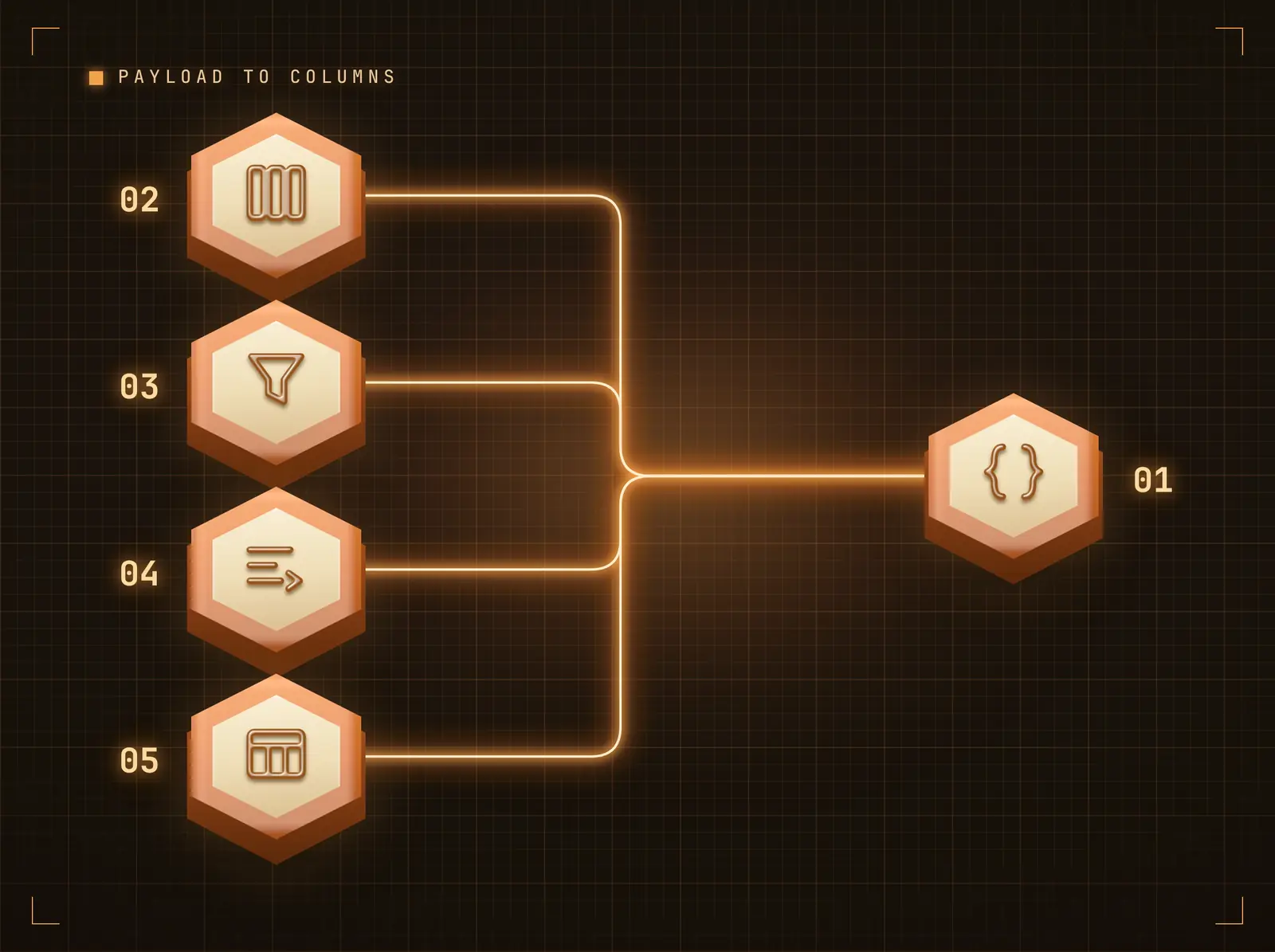
Shape the payload into screen content
Point display columns at payload fields with dot-notation paths, set defaults for missing fields, and apply per-column transforms — uppercase, lowercase, truncate, prefix, suffix. The same mapping engine powers every automation platform integration, so a recipe built once is portable across tools.
Your automation sends data; the mapping decides how it reads on screen.
Dot-notation paths reach nested payload fields
Defaults fill gaps so screens never show blanks
Transforms tidy values without touching the automation
HMAC-signed delivery
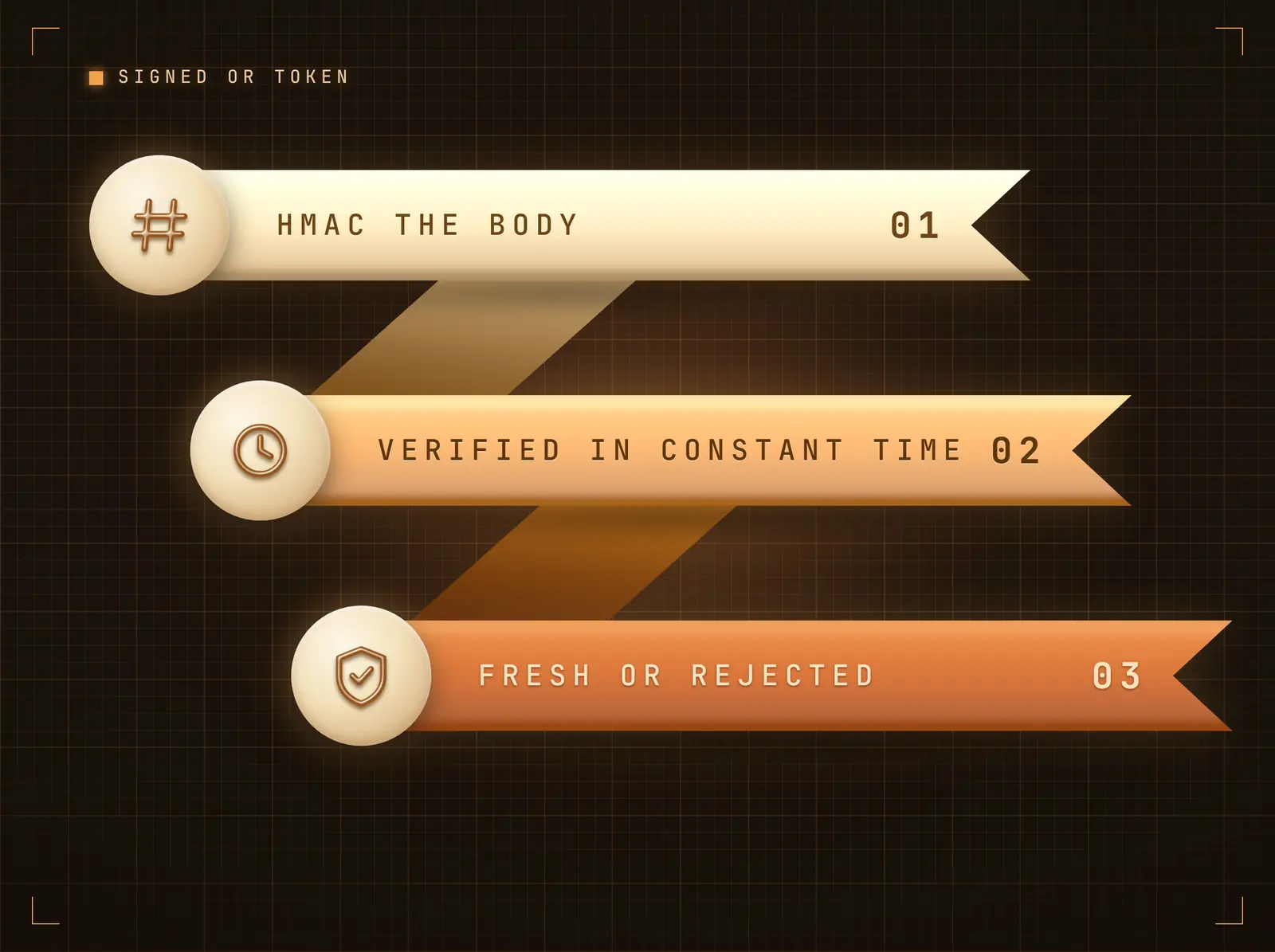
Sign the request body with your integration secret (HMAC-SHA256) and send the digest as X-Webhook-Signature; Hangar.Media recomputes and compares in constant time, fail-closed. The simpler X-Webhook-Token header mode is available too.
The body itself is proven authentic — not just the sender.
HMAC-SHA1/256/512 accepted, SHA-256 recommended
Constant-time comparison, fail-closed
Token-header mode available as the simple alternative
Four steps to connected screens.
From setup to live content in minutes, not days.
Connect the integration
Add the Celigo integration in Hangar.Media. Your unique inbound webhook URL and secret are generated instantly.
Add an HTTP import in integrator.io
Add an HTTP import as the flow destination: method POST, your inbound webhook URL, JSON body. Use hmacOptions in the request template to sign the body as X-Webhook-Signature — or simply send the X-Webhook-Token header.
Map fields to the display
Choose Data Table, Content Cards, or KPI Metrics, then map payload fields to display columns with the field mapper. Defaults and transforms are optional.
Push and publish
Run the automation. The payload renders in the bound widget on your screens within seconds — enable Accumulate for a rolling board of recent pushes.
Built for every sector.
See how different industries use this integration to drive results.
Order-flow wallboards
Flows syncing Shopify to NetSuite branch order counts and fulfilment SLAs to the warehouse screen on every run.
CorporateIntegration health at a glance
Error-handling flows push failed-record counts and retry status to the IT wall before tickets are raised.
HospitalityProcurement delivery boards
Flows reconciling supplier EDI push today’s expected deliveries to the goods-in screen.
FinancialSettlement batch status
Flows moving payout files push batch totals and exceptions to the finance-ops screen as they complete.
Common questions. Straight answers.
How is the webhook secured
Two modes: sign the body with HMAC-SHA256 via Celigo’s native hmacOptions helpers and send X-Webhook-Signature (recommended), or send the integration secret in the X-Webhook-Token header. Both are compared in constant time, fail-closed.
What payload shape does Hangar.Media expect
Any JSON. A single object becomes one row or card; an array of objects becomes one row or card per record. With a field mapping configured, only the mapped fields are displayed; without one, the raw fields are shown as a key-value table.
Can one push update several screens
Yes. The push lands in the integration’s data feed; every design widget bound to that feed updates, wherever those designs are scheduled — one push can update one screen or the whole estate.
Why is HMAC recommended over the token header
The HMAC signature proves the request body itself was produced by a sender holding the secret — a stronger guarantee than presenting the secret as a header. Celigo computes it natively in the request template, so the stronger mode costs nothing.
One price. The whole platform.
That's how we think signage should work. Content editor, screen management, and 200+ app integrations — all included from day one.
14 days free, up to 3 screens — no card needed.