n8n runs the workflow. Screens show the result.
n8n is the source-available workflow tool engineers actually like — self-hosted or cloud, 400+ nodes, real code when you want it. An HTTP Request node pushes any workflow's output to your Hangar.Media screens, HMAC-signed.
From workflow output to screen, signed
n8n workflows aggregate APIs, databases, files and queues; an HTTP Request node POSTs the result to your Hangar.Media inbound webhook. Because n8n has a Crypto node, the push can be HMAC-signed — the strongest verification mode — and self-hosters keep the entire pipeline on their own infrastructure.
What you can do with Screens show the result.
Three capabilities that make this integration essential for your digital signage network.
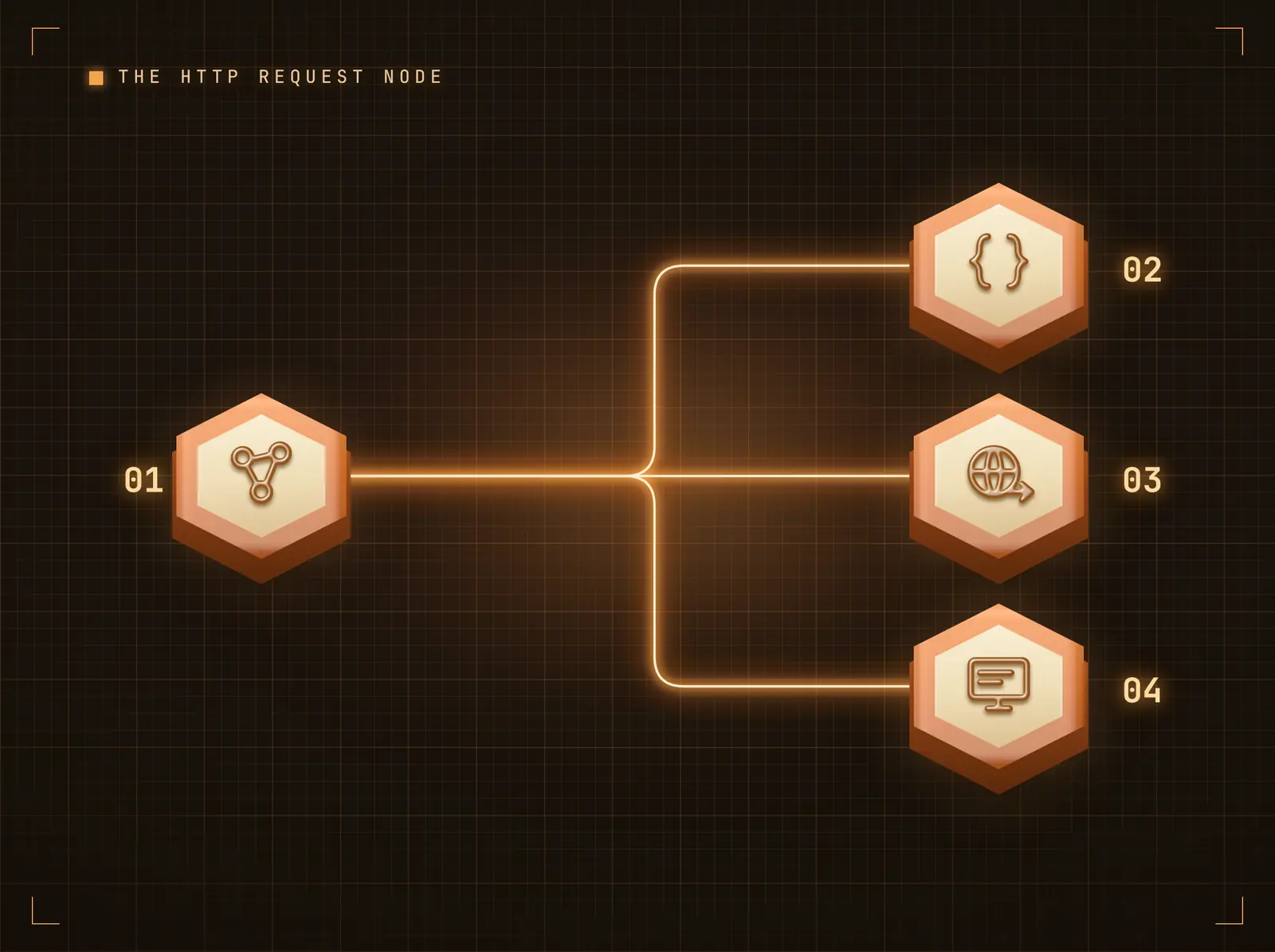
The HTTP Request node is the bridge
End any workflow with an HTTP Request node: method POST, your inbound webhook URL, JSON body from previous nodes. Expressions compose the exact payload; Split In Batches upstream controls how many records ride each push.
If a node can produce it, a screen can show it.
Expressions map any node output into the JSON body
JSON payloads of any shape — single records or lists
Screens update within seconds of the push arriving
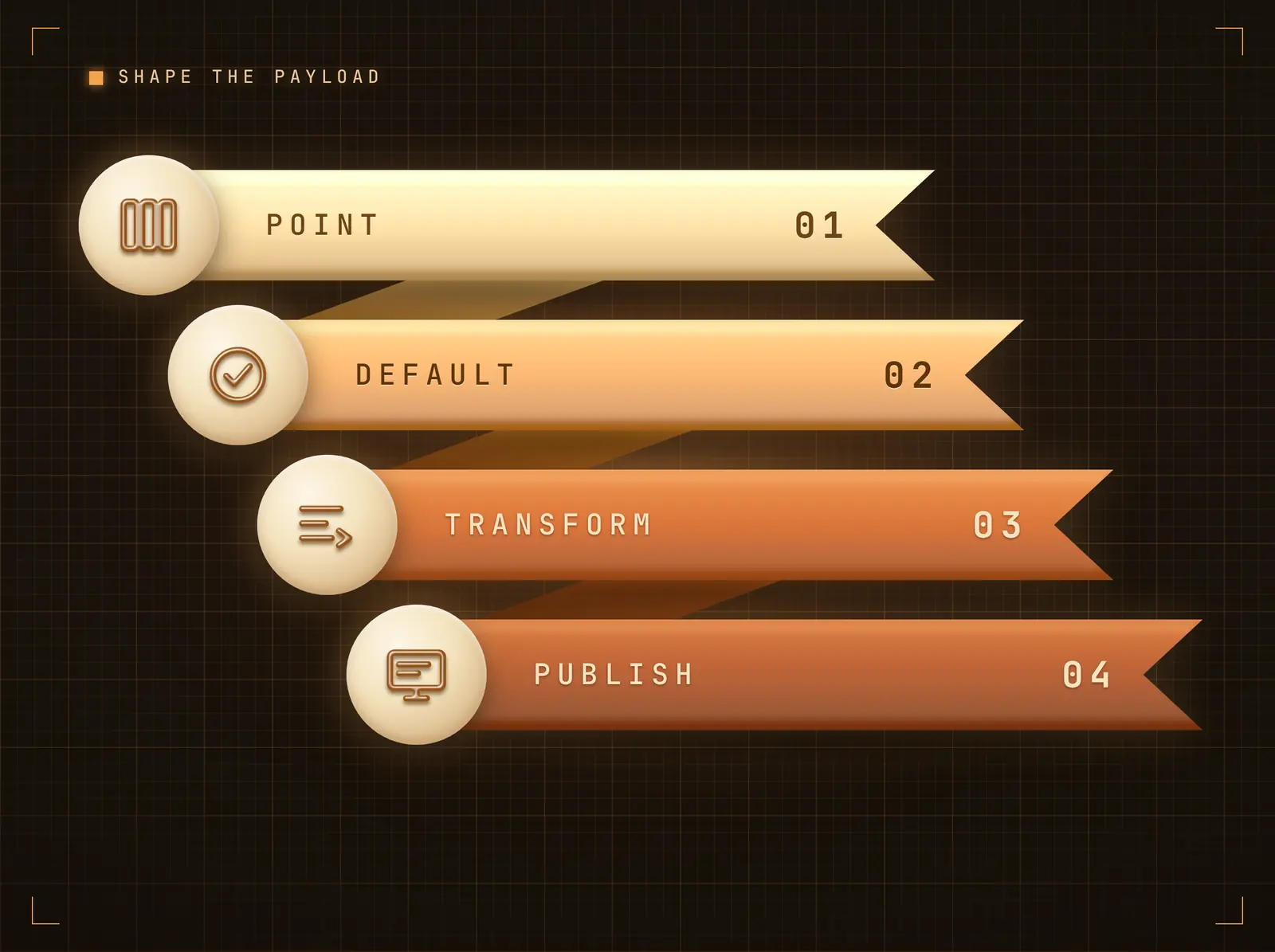
Shape the payload into screen content
Point display columns at payload fields with dot-notation paths, set defaults for missing fields, and apply per-column transforms — uppercase, lowercase, truncate, prefix, suffix. The same mapping engine powers every automation platform integration, so a recipe built once is portable across tools.
Your automation sends data; the mapping decides how it reads on screen.
Dot-notation paths reach nested payload fields
Defaults fill gaps so screens never show blanks
Transforms tidy values without touching the automation
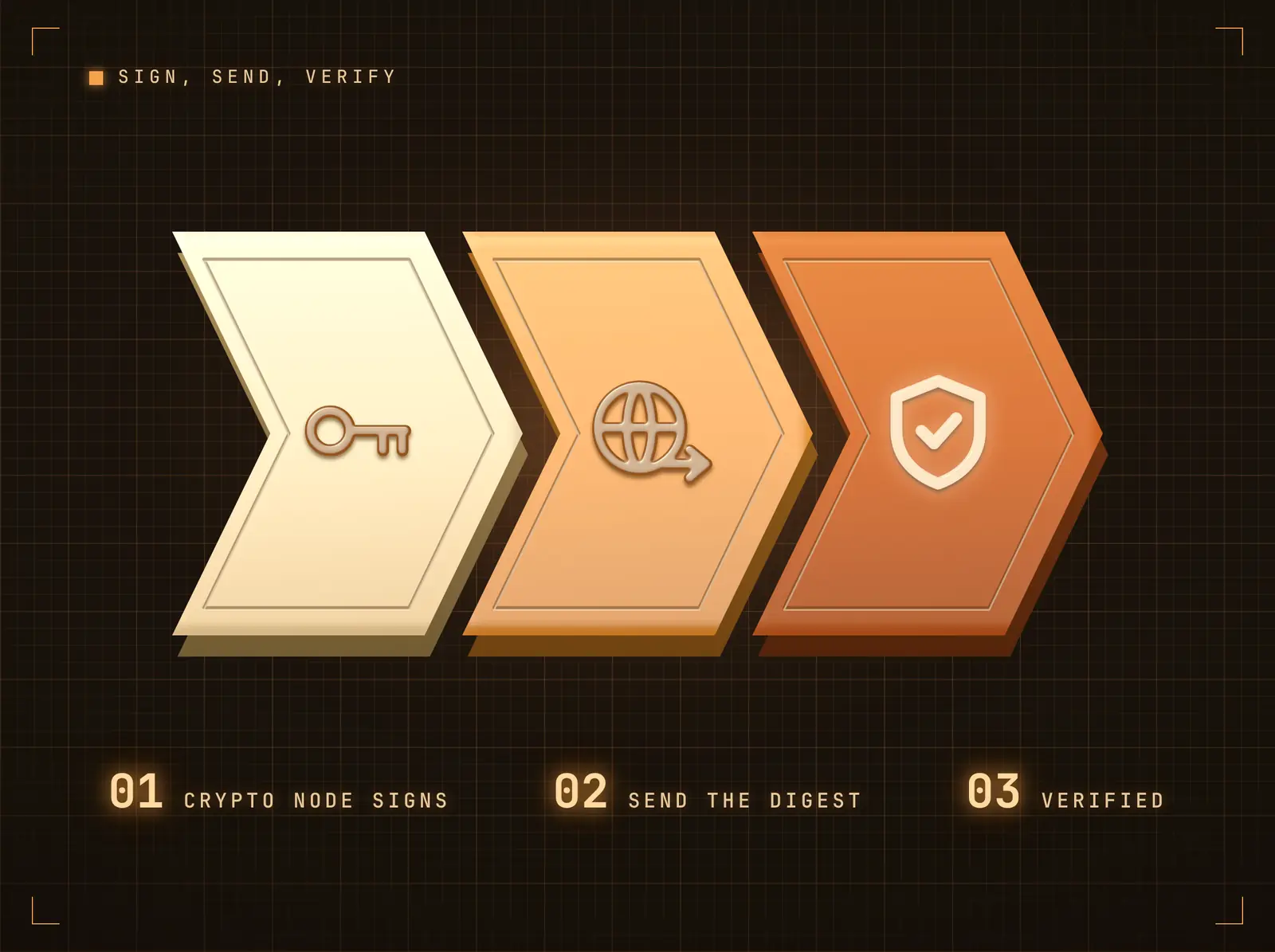
HMAC-signed, replay-protected delivery
A Crypto node computes an HMAC-SHA256 of the body with your integration secret; the HTTP node sends it as X-Webhook-Signature. Hangar.Media verifies in constant time, with optional Stripe-style replay protection. Secret-header mode remains for minimal workflows.
Every push is authenticated before a pixel changes.
HMAC-SHA256 body signing via the Crypto node (recommended)
Optional Stripe-style replay protection
Secret-header mode for minimal workflows
Four steps to connected screens.
From setup to live content in minutes, not days.
Connect the integration
Add the n8n integration in Hangar.Media. Your unique inbound webhook URL and secret are generated instantly.
Add the push nodes in n8n
Add a Crypto node (HMAC-SHA256 of the JSON body with your integration secret), then an HTTP Request node: method POST, your inbound webhook URL, the body, and the signature as X-Webhook-Signature.
Map fields to the display
Choose Data Table or Content Cards, then map payload fields to display columns with the field mapper. Defaults and transforms are optional.
Push and publish
Run the automation. The payload renders in the bound widget on your screens within seconds — enable Accumulate for a rolling board of recent pushes.
Built for every sector.
See how different industries use this integration to drive results.
Engineering status boards
Workflows polling CI, issue trackers and uptime APIs push a consolidated status table to the team-area screen.
RetailWarehouse exception cards
Inventory workflows detect exceptions and push alert cards to warehouse screens as they occur.
HealthcareLab result flow tables
Self-hosted workflows watching the LIS push anonymised throughput metrics to the lab office screen.
EducationService desk dashboards
Workflows aggregating the service desk queue keep a live table on the IT office screen.
Common questions. Straight answers.
How is the webhook secured
Best practice signs every push: a Crypto node computes an HMAC-SHA256 of the body with your integration secret, and Hangar.Media verifies it in constant time with optional replay protection. The simpler X-Webhook-Token header mode also works.
What payload shape does Hangar.Media expect
Any JSON. A single object becomes one row or card; an array of objects becomes one row or card per record. With a field mapping configured, only the mapped fields are displayed; without one, the raw fields are shown as a key-value table.
Can one push update several screens
Yes. The push lands in the integration's data feed; every design widget bound to that feed updates, wherever those designs are scheduled — one push can update one screen or the whole estate.
Does self-hosted n8n work
Yes — identically to n8n Cloud. The integration only receives outbound HTTPS requests from your instance; nothing connects back into your network.
One price. The whole platform.
That's how we think signage should work. Content editor, screen management, and 200+ app integrations — all included from day one.
14 days free, up to 3 screens — no card needed.