Your WordPress works. Your screens announce it.
OttoKit (formerly SureTriggers) automates WordPress and 1,000+ apps — WooCommerce orders, form entries, memberships, LMS events. Add a webhook action to any automation and the data appears on your Hangar.Media screens.
WordPress events become screen content
OttoKit's deepest triggers are the WordPress ecosystem — WooCommerce, SureForms, LearnDash, membership plugins — plus a broad SaaS catalog. A webhook action POSTs the automation's data to your Hangar.Media inbound webhook, where the field mapper shapes it into a table or announcement cards.
What you can do with Your screens announce it.
Three capabilities that make this integration essential for your digital signage network.
The webhook action completes the automation
Add OttoKit's webhook action as the final step: method POST, your inbound webhook URL, JSON body composed from trigger data. Each WooCommerce order, form entry or course completion becomes a push.
The shop sells; the back office sees it instantly.
Compose the body from any trigger or step field
JSON payloads of any shape — single records or lists
Screens update within seconds of the push arriving
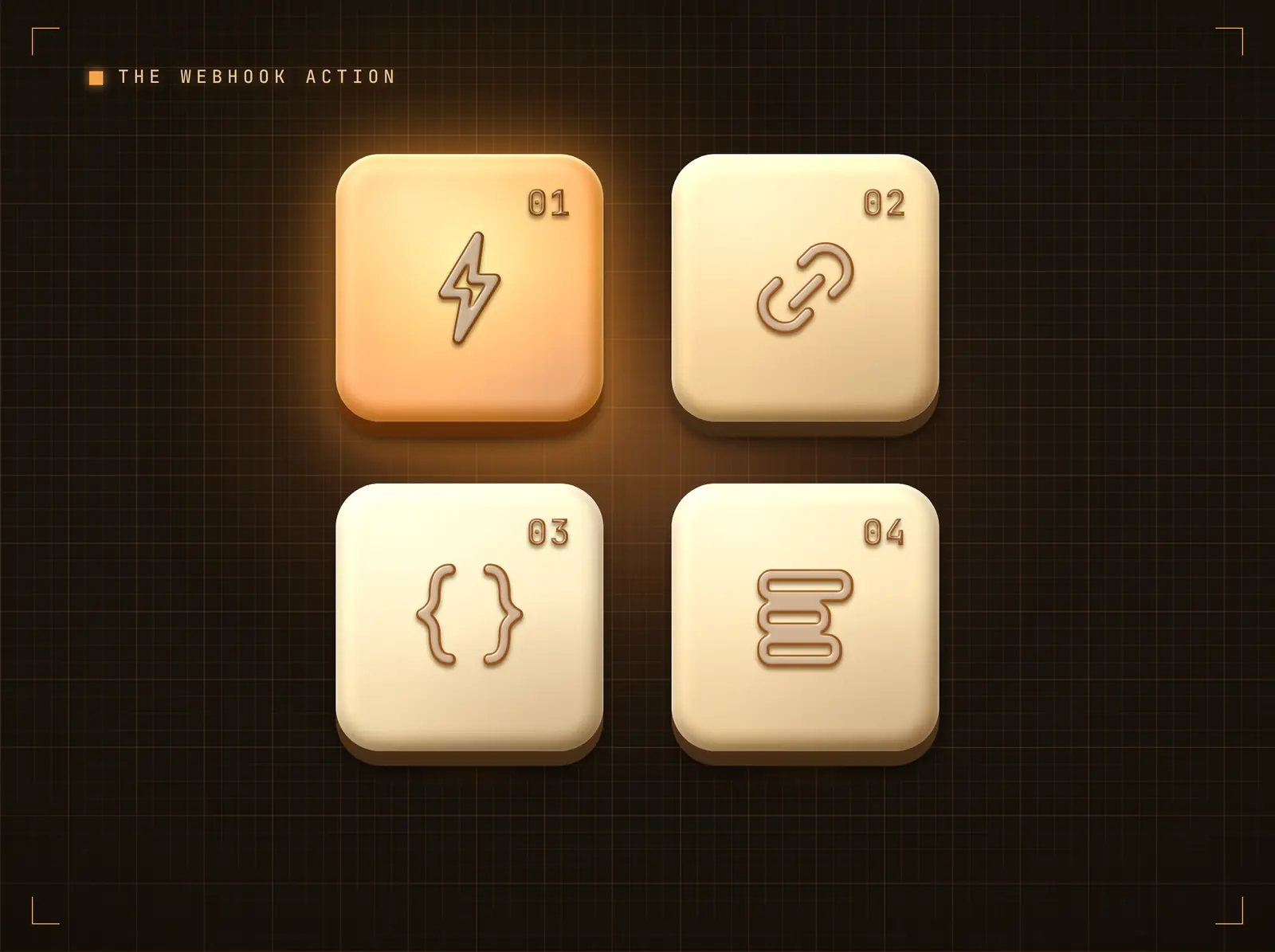
Shape the payload into screen content
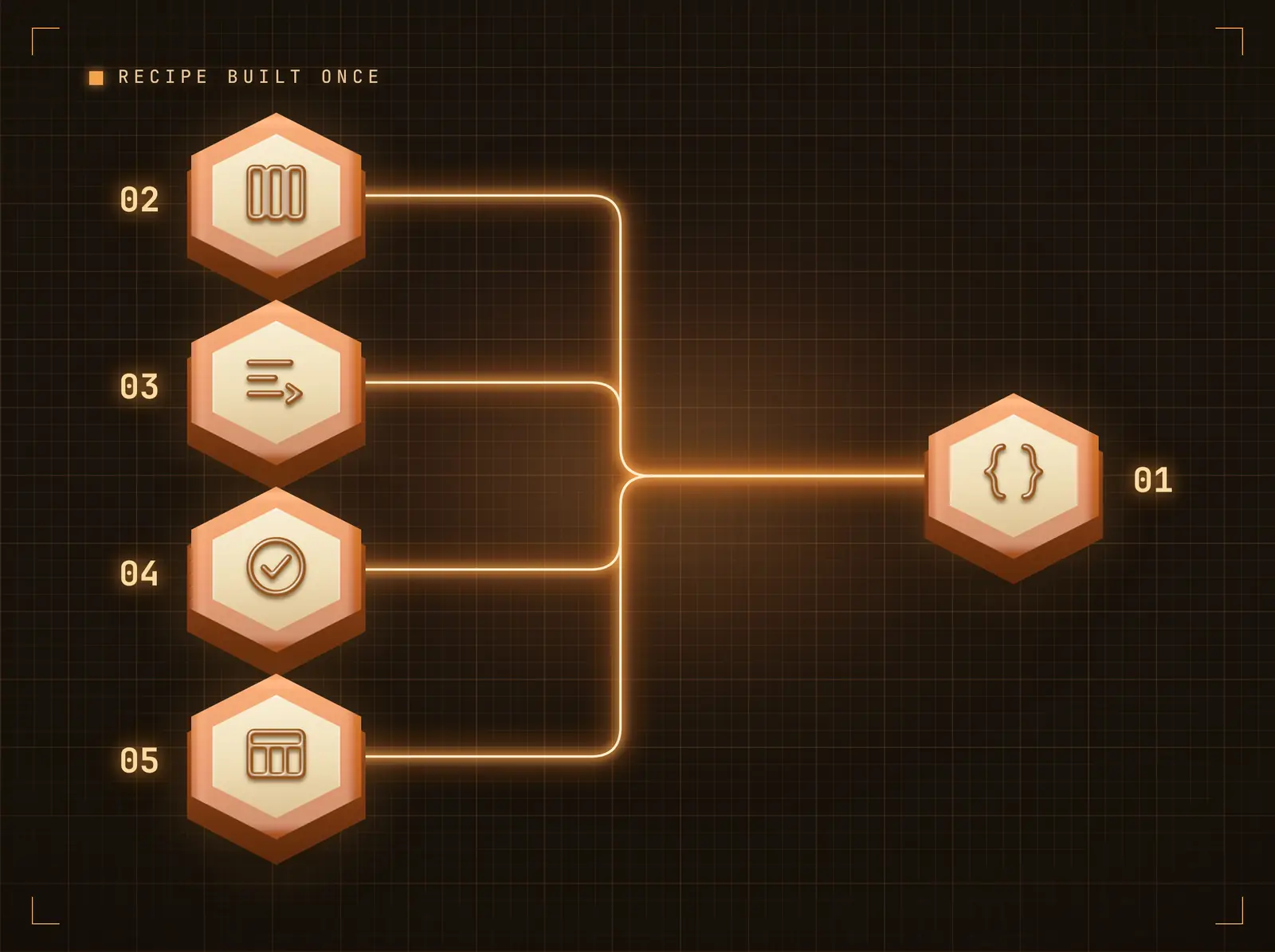
Point display columns at payload fields with dot-notation paths, set defaults for missing fields, and apply per-column transforms — uppercase, lowercase, truncate, prefix, suffix. The same mapping engine powers every automation platform integration, so a recipe built once is portable across tools.
Your automation sends data; the mapping decides how it reads on screen.
Dot-notation paths reach nested payload fields
Defaults fill gaps so screens never show blanks
Transforms tidy values without touching the automation
Token-verified delivery
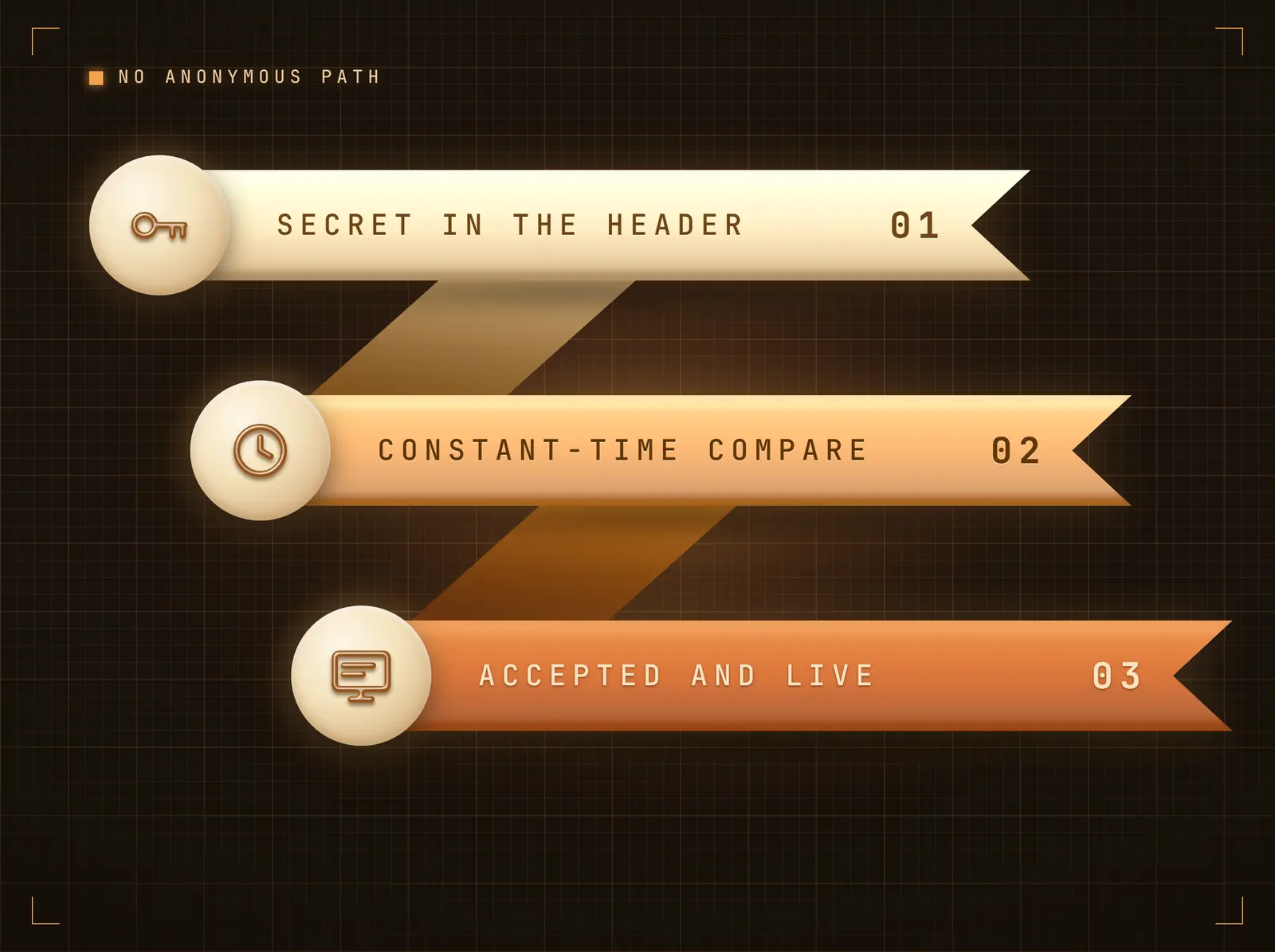
OttoKit sends your integration secret in the X-Webhook-Token header; Hangar.Media compares it in constant time, fail-closed, and rejects anything else with a 401.
Every push is authenticated before a pixel changes.
Constant-time secret comparison, fail-closed
One-click secret rotation
Unknown senders receive 401 and publish nothing
Four steps to connected screens.
From setup to live content in minutes, not days.
Connect the integration
Add the OttoKit integration in Hangar.Media. Your unique inbound webhook URL and secret are generated instantly.
Add a webhook action in OttoKit
In your automation, add the Webhook action: method POST, your inbound webhook URL, JSON body, and a header X-Webhook-Token with your integration secret.
Map fields to the display
Choose Data Table or Content Cards, then map payload fields to display columns with the field mapper. Defaults and transforms are optional.
Push and publish
Run the automation. The payload renders in the bound widget on your screens within seconds — enable Accumulate for a rolling board of recent pushes.
Built for every sector.
See how different industries use this integration to drive results.
WooCommerce order boards
New-order automations push celebration cards to the back-office screen with product and value.
EducationCourse milestone cards
LMS automations push enrolment and completion milestones to staff screens.
CorporateLead capture streams
Form-entry automations accumulate fresh leads into a rolling board on the sales screen.
HospitalityBooking notifications
Booking-plugin automations push reservation cards to the host-stand screen as they land.
Common questions. Straight answers.
How is the webhook secured
The webhook action includes your integration secret in the X-Webhook-Token header; Hangar.Media compares it in constant time and rejects non-matching requests with a 401 — fail-closed, with no anonymous path.
What payload shape does Hangar.Media expect
Any JSON. A single object becomes one row or card; an array of objects becomes one row or card per record. With a field mapping configured, only the mapped fields are displayed; without one, the raw fields are shown as a key-value table.
Can one push update several screens
Yes. The push lands in the integration's data feed; every design widget bound to that feed updates, wherever those designs are scheduled — one push can update one screen or the whole estate.
Is this the same product as SureTriggers
Yes — SureTriggers rebranded to OttoKit. Existing SureTriggers automations work unchanged; add the webhook action and point it at your Hangar.Media inbound URL.
One price. The whole platform.
That's how we think signage should work. Content editor, screen management, and 200+ app integrations — all included from day one.
14 days free, up to 3 screens — no card needed.